



.svg)
.svg)
Stop Sending the Same Message to Every Customer
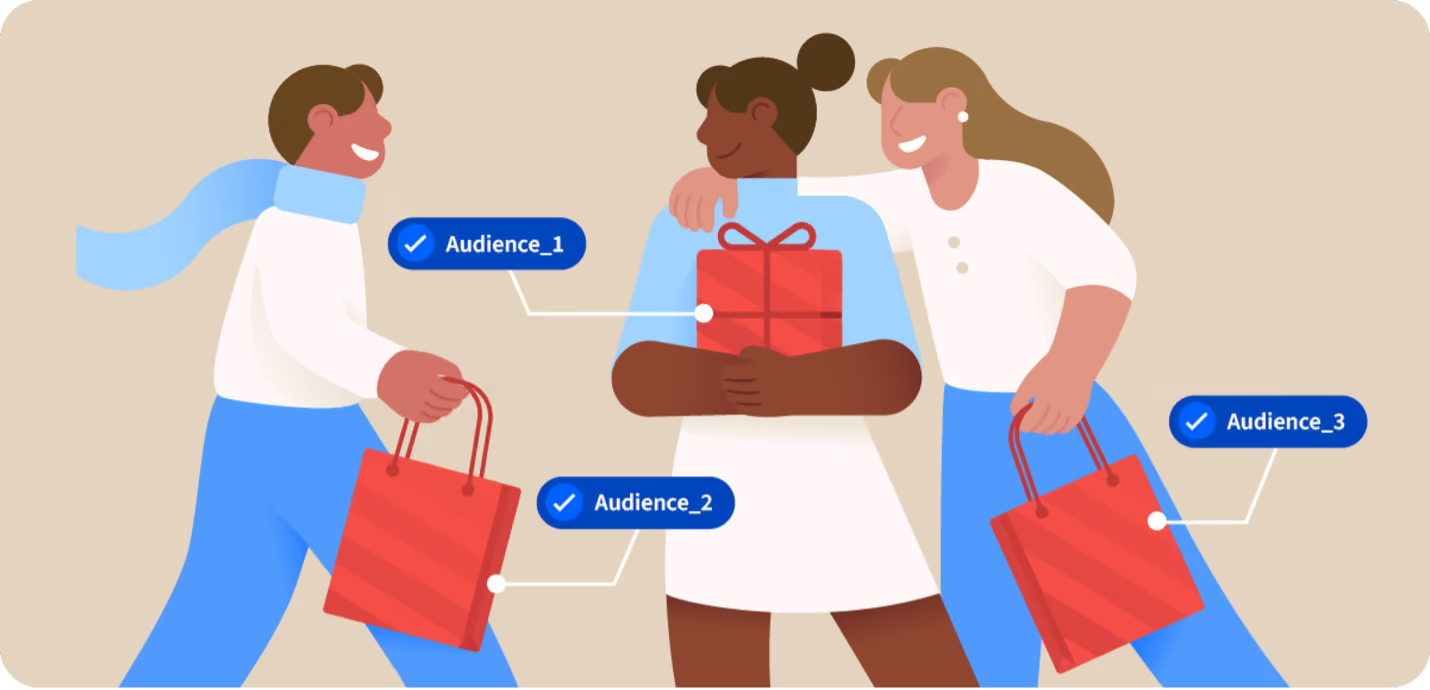
Not every customer is the same.
Some are brand new. Some have purchased from you before. Some are loyal repeat customers. Some are interested but not ready to act. Some have gone quiet and may need a reminder.
So why send them all the same message?
When every customer receives the exact same email, text, offer, or follow-up, your communication can start to feel generic. Customer segmentation helps solve that problem by allowing your business to organize your audience into meaningful groups and communicate with more intention.
What Is Customer Segmentation?
Customer segmentation is the process of dividing your audience into smaller groups based on shared traits, behaviors, or interactions with your business.
That could include:
- New leads
- First-time customers
- Repeat customers
- VIP customers
- Inactive customers
- Rewards members
- Subscription customers
- Customers interested in a specific service
- Customers in a specific location
- Customers who clicked, purchased, booked, or requested more information
Instead of treating your entire audience the same way, segmentation helps you understand who you are talking to and what they may need next.
Why Segmentation Matters
Customers are more likely to pay attention when a message feels relevant.
A first-time customer may need a welcome message. A loyal customer may appreciate a reward. Someone who has not purchased in a while may need a reminder. A customer who clicked on a specific service may benefit from a follow-up with more information.
Segmentation allows your business to send messages that feel more useful and timely.
It also helps reduce wasted communication. Instead of sending every offer to every person, you can send the right message to the right group.
Tracking Helps You Understand What Is Working
Segmentation becomes even more valuable when it is paired with tracking.
Tracking customer behavior helps your business understand how people are interacting with your messages, website, offers, and services.
You may be able to see:
- Who opened an email
- Who clicked a link
- Who filled out a form
- Who made a purchase
- Who joined a rewards program
- Who has not engaged recently
- Which customer groups respond best to certain messages
That information can help you make smarter decisions about future communication.
For example, if repeat customers respond well to a seasonal offer, you may want to build more campaigns around that group. If new leads are not taking the next step, you may need clearer follow-up messaging.
Better Data Leads to Better Communication
Customer data does not have to be overwhelming.
At its best, it gives your business a clearer picture of who your customers are and how they interact with you. That can help you improve email marketing, text messaging, rewards programs, subscription offers, customer follow-up, and other communication strategies.
Mailchimp found that segmented email campaigns had 14.31% higher opens and 100.95% higher clicks than non-segmented campaigns. That shows how much stronger communication can be when messages are sent to more focused audience groups.
Segmentation helps your business move away from broad, one-size-fits-all messaging and toward communication that feels more relevant and easier to act on.
Examples of Segmented Messaging
Here are a few simple examples of how businesses can use customer segments:
New Leads
Send a welcome message, helpful resources, or next steps to help them learn more about your business.
First-Time Customers
Follow up with a thank-you message, care instructions, related services, or a review request.
Repeat Customers
Send loyalty offers, rewards updates, exclusive announcements, or early access to promotions.
Inactive Customers
Send a re-engagement message, reminder, or special offer to bring them back.
Subscription Customers
Share renewal reminders, usage updates, account information, or personalized recommendations.
Service-Specific Audiences
Send information based on the product or service someone has shown interest in.
Each message becomes more useful because it is connected to the customer’s relationship with your business.
Segmentation Supports the Full Customer Journey
People do not all enter your business at the same stage.
Some are just learning who you are. Some are comparing options. Some are ready to buy. Some already have a relationship with you.
Segmenting and tracking customers allows your business to communicate based on where someone is in that journey.
That can help you:
- Nurture leads
- Encourage repeat purchases
- Strengthen customer loyalty
- Improve follow-up
- Promote relevant offers
- Reduce missed opportunities
- Better understand what is working
When your communication matches the customer’s stage, it becomes more helpful and more effective.
Your Customer List Should Be More Than a Spreadsheet
A customer list is valuable, but only if you can use it.
If your data lives in spreadsheets, inboxes, notebooks, or disconnected platforms, it can be difficult to act on. A more organized system can help you capture customer information, segment your audience, track engagement, and compare insights across different groups.
That makes your marketing easier to manage and your communication more intentional.
Make Your Messaging More Relevant
Your customers do not all need the same message.
By segmenting and tracking your audience, your business can better understand who your customers are, what they care about, and how to communicate with them more effectively.
At Dail Digital, we help businesses organize customer data, create meaningful audience segments, and use those insights to support smarter communication.
If your business is ready to stop sending the same message to every customer, reach out to our team today.
Insights from our blog

Let's Build Something That Works for Your Business
Whether you’re looking to improve your current marketing or build a stronger foundation from the ground up, our team is ready to help you take the next step.